


Account-Based RevOps
2026-08-14
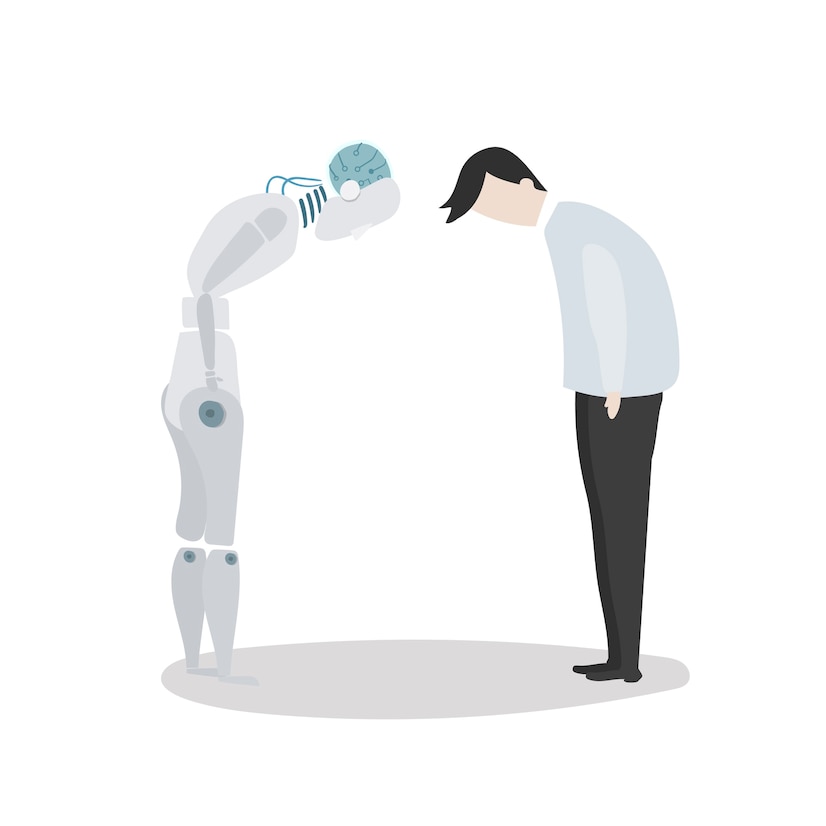
Last week, the race for search engine supremacy tightened as Bing and Google each announced AI enhancements to their search functions. The back and forth between the two has shaken the tech world (and resulted in Google losing $100 billion in a single day), but here we’ll focus on its impact on search engine marketing.
First, a recap: Google has been struggling to filter AI-generated spam from its search results. Microsoft, partnered with OpenAI, has integrated ChatGPT with Bing to provide conversational responses to users, which could result in higher quality search results.
Last week, Bing released a limited beta of their new Chat system, which allows for technically complex queries. Users can then ask clarifying questions or probe into additional details, and the search engine will respond.
Responding to growing hype, Google hurriedly announced their own conversational AI service, Bard. Unfortunately, Bard failed rather spectacularly during its first demonstration, causing some to predict the possible demise of Google’s longstanding market domination.
In short, Microsoft is up and Google is down, but the credibility of these conversational AIs is in question. Phrases like “what is ChatGPT,” “who created ChatGPT,” and “does ChatGPT save data” are increasingly being searched by users wondering how much they should trust this ostensibly all-knowing tool.
Microsoft also has its own issues. Bing Chat is experiencing similar “AI hallucinations,” which occur when language models confidently spout factually incorrect information (for example, a play-by-play of a football game that hasn’t yet occurred).
Using the poison as the cure seems like a dodgy prospect in the short term. If search engine results are filled with Google or Microsoft’s proprietary misinformation rather than third-party spam, does it really make a difference for the users?
However, there’s one group whose world will certainly be shaken up by the AI revelations: businesses and marketers running ads on these search engines.
The PageRank algorithm is often frustratingly opaque, but it has a few unyielding pillars, e.g.: prioritizing domains that have many high-quality backlinks, speak in plain language, and have a certain amount of text per page.
But PageRank has failed to account for AI systems like ChatGPT, which can generate boatloads of nonsensical, heavily optimized content and support it with backlinks.
“The age of PageRank as the model for finding the best pages on the web is over, with the algorithm ending up being polluted and entirely dominated by ads… The algorithms themselves are constantly leading an internal battle between optimizing for ad revenue and optimizing for what the user wants. In most cases the former wins.”
- Vladimir Prelovac, CEO of Kagi.
It's sort of thrilling to imagine an online landscape where minimal human input results in content written, crawled, categorized, and distributed by AI. Unfortunately, today's systems aren't up to the task. Allowing AI to manage tasks integral to the Internet's function (like content distribution) without supervision would be a mistake; something both Google and Microsoft are acutely aware of. However, the vast proportion of content written by minimally supervised AI has created a load on search engines that is simply too heavy to bear without resorting to automation.
Google and Microsoft are in a situation neither has been in before: the scale of content has exceeded their ability (and their technology). Their best is no longer good enough.
We’d love to end this post by telling marketers exactly how AI will change SEO, but it’s impossible to predict how language models will react to unprecedented usage. However, we can offer some advice to ease the transition into a world of human-AI collaboration:
We won’t give your details to third party



.png)
.png)
.svg.png)
